
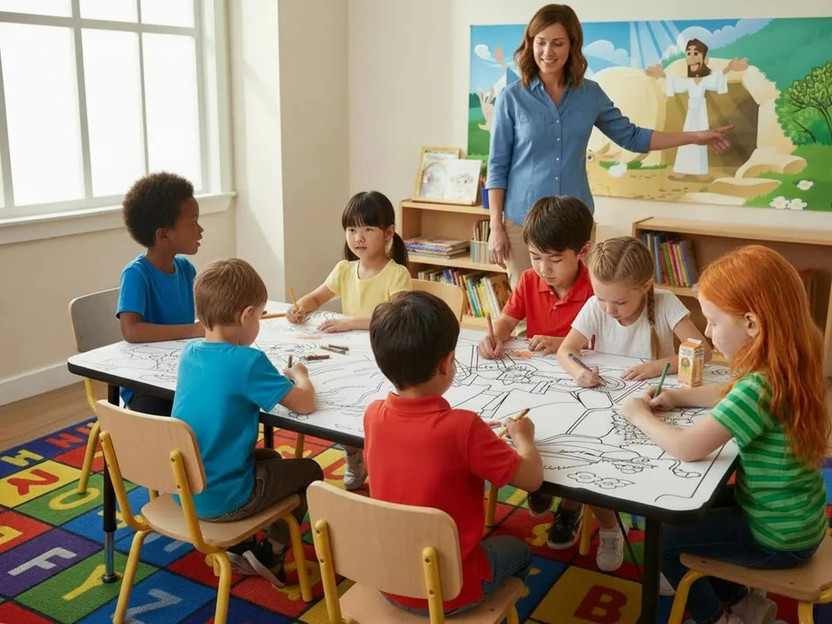
Match Kids' Activities to Strengthen Your Easter Message
Posted by Michele Triplett on 31st Jan 2026
From the Walls to Their Hands: Aligning Kids' Easter Experience
Easter is a narrative of hope that connects the "exchange" on the Cross, where Jesus took their place, with the joy of a risen Savior.
Easter offers excitement, but the noise of baskets and bunnies often crowds out the true message kids need.
You have already set a beautiful stage with banners and decals. Now, let's make them "speak." Decor isn't just background; it is a bridge. When used intentionally, your walls tell the story of the Resurrection before you say a word.
This resource helps Children's Ministry leaders turn banners and wall decals into intentional teaching tools. Learn how to use your visual environment to guide children away from the surface "noise" and into the heart of the Resurrection story.
The Problem: Beautiful Walls, Disconnected Hands
Kids are constantly scanning for cues that say, "This story includes me."
The result? Kids feel noticed. Included. Understood.
When a beautiful hallway leads to a generic handout, the message gets lost in the disconnect. In a season filled with sugar and distraction, that uneven experience makes it harder for the truth to land.
The Solution: Visual Anchoring in Action
Let’s align the message. We provide Easter visual tools and activities that carry the same weight and beauty as your teaching, ensuring every child feels the full embrace of the Easter story.
When children see the same image repeatedly, something beautiful happens. Their brains connect concepts.
If the Resurrection banner shows Jesus wearing a red robe, and children color Jesus the same way on their activity page, the image becomes familiar. Comforting. Real.
The story begins to settle.
The decoration stops being just a background; it becomes part of how the story is understood and remembered.
“Look Up” Moments: Make the Room Part of the Lesson
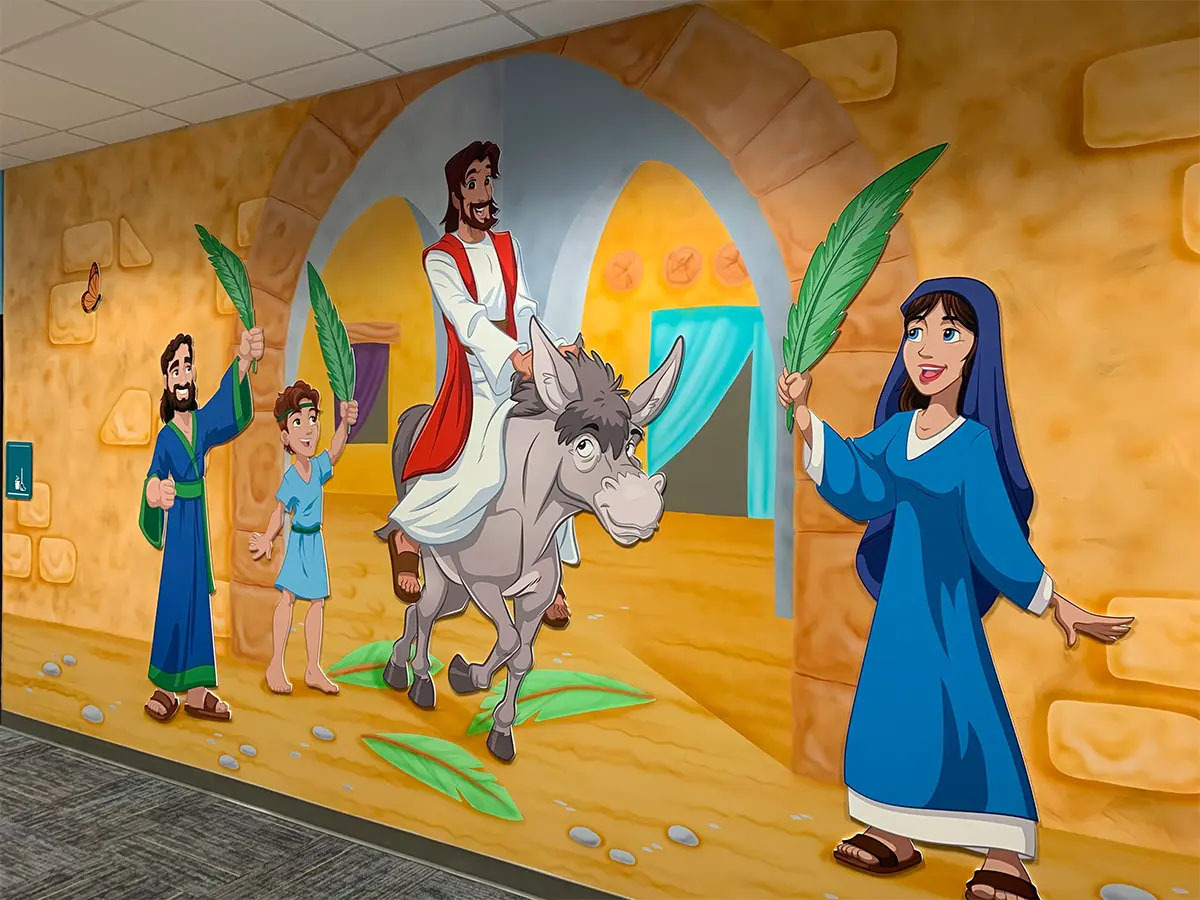
By utilizing the room as a "third teacher," educators can boost engagement, enhance conceptual understanding, and foster a more dynamic, student-centered atmosphere.
So often, preschool activities keep kids looking down—heads bent, crayons moving fast. But Easter invites us to look up.
When classroom visuals and activities work together, leaders can draw children into the space around them. Help children connect what they are doing with what they are seeing.
An Easter banner set provides visual, thematic focal points that help children connect joyful, hands-on activities to the broader, meaningful narrative of Easter.
3 Visual/Activity Synchronization Suggestions for Holy Week
Think of the Wall (Visual) and the Table (Activity) as a single, unified data point.
When these are out of sync, the child's brain has to work harder to translate the lesson. When they are in sync, the environment does the teaching for you.
- Palm Sunday: Welcoming Jesus As children color palm branches or trace "Hosanna," invite them to look at the Palm Sunday banner in the room.
Locate the palms on the wall banner and color your page to match. - Good Friday: A Loving Sacrifice During Good Friday activities, point out the Good Friday banner of Jesus on the Cross. "Let’s look at the picture on the wall. Jesus loved us so much. As we color, we remember how much He loves us. His friends were very sad that day, but they wouldn’t be sad for long. He had a big surprise for them."
The banner provides a visual anchor that supports a softer, age-appropriate conversation without overwhelming details. - Resurrection Sunday: Jesus Is Alive As children work on the tomb activity, teachers can invite them to reference the Resurrection banner nearby: “Color your picture of Jesus just like the picture on the wall of Jesus standing outside the tomb. When you’re done, trace the words 'Jesus is alive.'
After Jesus died, His friends placed Him in the tomb because they loved Him. Three days later, God raised Jesus from the dead. His friends were surprised—and thrilled to see Him! His friends were surprised and thrilled to see Him!
In that moment, children aren’t just finishing a craft; they’re connecting their hands, their eyes, and their heart to the Easter event. Teachers can pause and ask, "Does that surprise you? Does it make you happy?" Through engaging, age-appropriate activities, they can participate in the celebration of new life and the empty tomb.
Explore the Easter Story Together
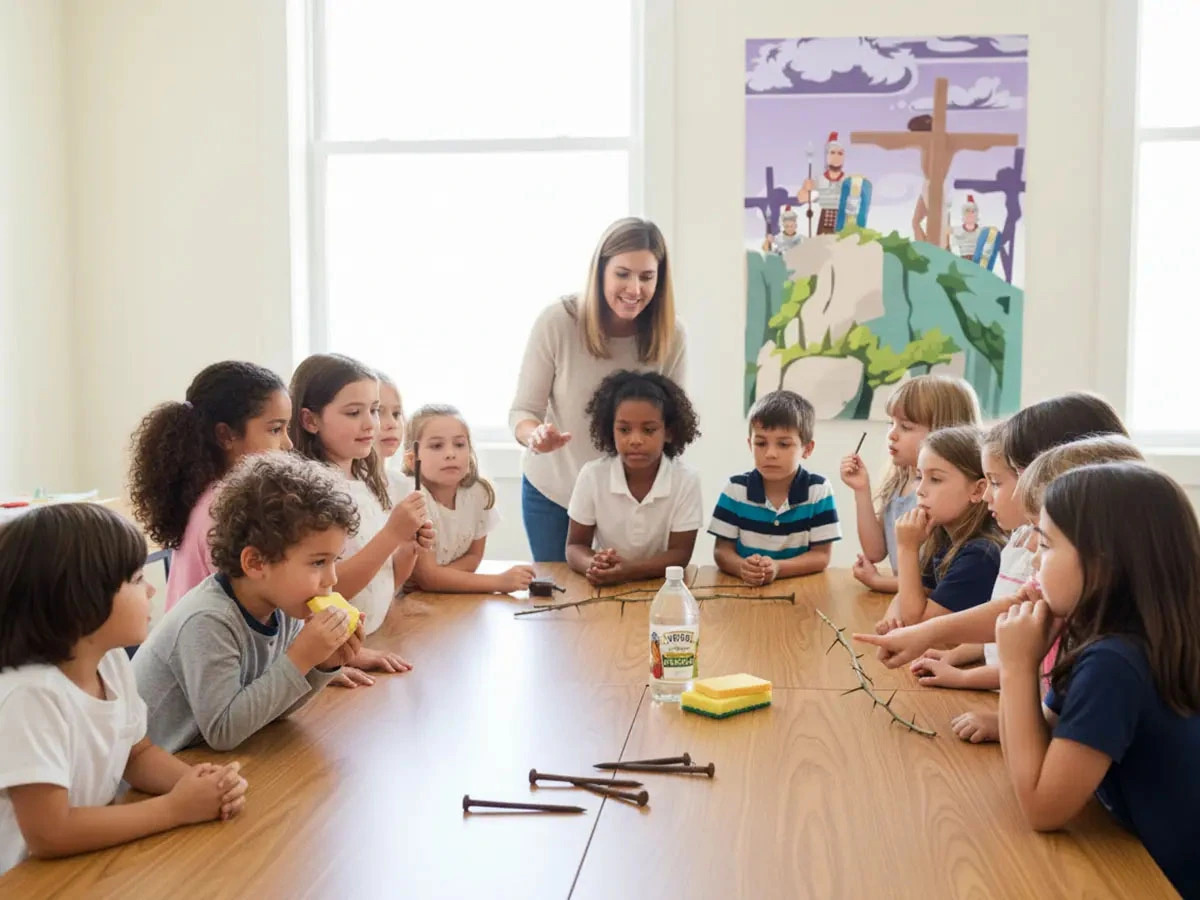
Pair classroom visuals with sensory moments to teach the Easter Story
Connect classroom activities to the surrounding wall visuals. Easter wall decals, banners, and displays can reinforce biblical truth while guiding meaningful conversations.
For elementary-aged kids, hands-on learning makes the Easter story more meaningful. When children can see, touch, and experience the story, it becomes easier to understand and remember.
Ideas to engage elementary kids with hands-on learning:
- Pair Easter Visuals with Simple Sensory Moments: Use your Easter visuals as conversation starters by adding simple, age-appropriate sensory experiences:
- Hold a large nail while talking about the Cross.
- Let children carefully smell vinegar on a sponge as they learn what Jesus was offered when He asked for a drink. Show or gently touch a thorny branch similar to the crown placed on Jesus’ head.
Note for teachers: Supervise use of nails, vinegar, or thorns; check for allergies.
Ask Open-Ended Questions About Jesus
As you point to the visuals, ask questions that encourage observation and reflection:
- "What do you notice about Jesus in this picture?"
- "What do you think this image tells us about who He is?"
- Does this tell you about His love and sacrifice?
Guide the conversation deeper with questions about Jesus’ love and sacrifice:
- "Why do you think Jesus chose to lay down His life for us?"
- "What does it mean that He loves you that much?"
Help children relate the story to their own experiences:
- "Have you ever done something hard for someone you love?"
- "How is that like what Jesus did?"
- "Jesus is that kind of friend. What does that tell you about how He cares for you?"
Remind them:
"This isn’t just a picture. This is part of the Easter story; this story shows how much Jesus loves you."
When the Easter Story Continues at Home
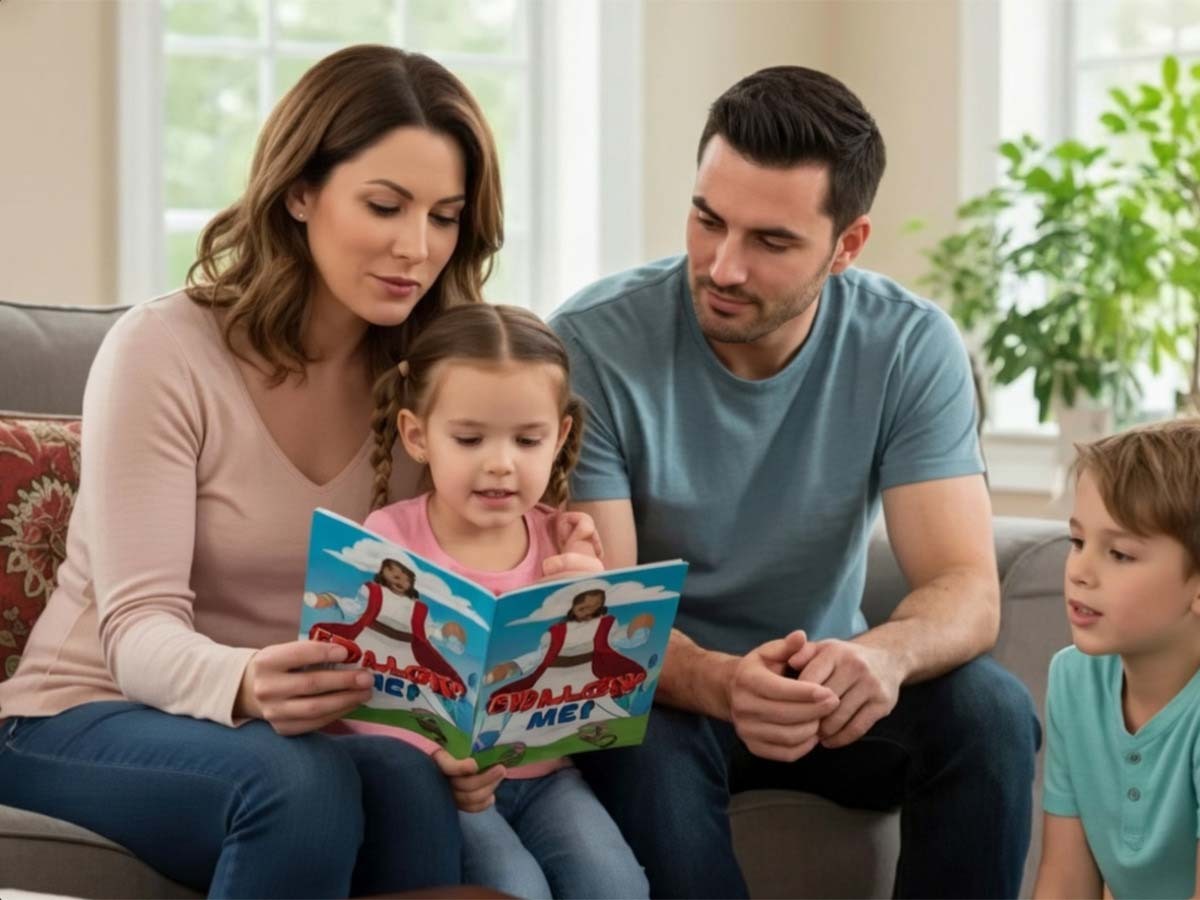
Accompanying activities that kids take home extend the impact of the Easter message.
When an activity reflects the same visuals children saw in the room, the lesson doesn't end when class does. Children begin to feel like the Easter story isn't just something they heard once; it's something they know. Something they were part of.
The story is not just a past event but a present, moving, and transformative message. Learning reinforcement activities allow families to move beyond a one-hour church service and immerse themselves in the central message of Easter — the death and resurrection of Jesus.
- That activity page goes home.
- It gets shared with a parent.
- They tell about the hands-on experiences they did in class.
- It sparks a conversation around the coffee table or at bedtime prayer.
Repetition becomes a gift
This creates an opportunity for families to explore Jesus, salvation, and baptism further. Using resources like our "Follow Me" Salvation Booklet to continue the conversation at home, you help kids understand the meaning of Easter.
- First on your kids' church walls.
- Then, in their hands, through an activity.
- Later at home with family.
Activities are reinforcement learning that anchors the Easter story
These aids help learners connect with the story's emotional depth and theological significance, turning abstract concepts into tangible learning tools.
They’re familiar. And familiarity builds confidence and connection.
Hands-on engagement helps kids remember not just what happened, but how deeply He loves them.
When children can see it, touch it, and talk about it, the story moves from abstract to personal. It leaves a memory. An impression. A sense of connection.
And suddenly, Easter isn't just something that happens at church; it becomes a story children can retell with confidence and joy.
In a world full of fleeting celebrations, this matters. Children need reminders that Easter isn't about what they collect—but about who they belong to.
- Bringing the Easter Story of redemption to life with powerful visuals.
- Reinforce the message with activities that they can take home.
- The story becomes more than something they observe; it becomes a story they were part of, one they understand, and one they want to share with family and friends.
Creative For Kids shares helpful resources for families and children’s ministry. Newsletter sign-up includes free printable coloring pages. Matching artwork bridges the gap between classroom visuals and home reinforcement.
Conclusion: We Design So You Can Desciple
Align your classroom environment with your curriculum to increase lesson retention.
Chocolate bunnies and puffy peeps come and go. Egg hunts end. Prizes fade. But when walls, hands, and hearts tell the same story, children begin to understand something more profound. By incorporating a mix of these visual and activity types, you can create a more engaging and immersive experience for your young audience.
They learn that Easter is about love. Sacrifice. Salvation. And belonging. It becomes a lasting foundation, rooted in the joy of knowing that Jesus is alive — and that He loves them.