

How to Talk About Salvation With Kids
Posted by Michele Triplett on 23rd Mar 2026
Helping Church Staff Explain Salvation Clearly
Once spiritual readiness is discerned, the next question is: How do we help a child understand and receive the gift of salvation?
In Part 1 of this guide, we explored how to recognize spiritual readiness in a child and why those early moments of worldview formation matter so much.
For many ministry leaders, this moment can feel weighty. As art suppliers for kids ministries, we want to support your efforts when explaining the gospel without confusing a child. Visual art helps simplify biblical truth and avoids creating pressure.
The good news is that children do not need complicated explanations. They need clear truth presented with patience, love, and simplicity.
Simplicity must guide every word.
What Is the Child Salvation Journey?
The child salvation journey is the sacred process of helping a child recognize their need for Jesus and respond in faith. Ministry leaders guide this by discerning spiritual readiness, sharing the gospel clearly, and walking alongside children as they grow.
CreativeForKids offers resources when you explain the salvation journey.
It involves spiritual readiness, clear explanation of salvation, and intentional discipleship that helps the child grow in lifelong faith. Children understand spiritual truth best through simple, concrete language, visuals, and supporting activities.
For teachers who appreciate having a simple visual guide, the Follow Me Salvation Booklet can be a helpful tool.
It walks through the story of salvation in language children understand and gives them a place to respond when they are ready. Many teachers also like sending it home so children have a lasting reminder of their decision to follow Jesus.
You might say:
"God loves you so much that He did all the hard work. Jesus took the pain and punishment for sin so you wouldn’t have to. He made it possible for you to belong to God forever.”
To make speaking these truths "sticky", consider displaying these key concepts on your Sunday School walls or using Bible lesson flashcards to help the definitions stick:
Break it down:
- Sin: Choosing our own way instead of God’s way. (Visual Tip: Use a 'Road Signs' theme to show the wrong turn vs. God's path.)
- Separation: Sin creates a gap between us and God.
- Jesus as Savior: He paid for our sin so we can be with God.
- Jesus as King: He leads our lives with love and power.
- Faith: Trusting that what God says in the Bible is true.
- Repentance: A "U-turn"—choosing to turn away from our way and toward Jesus.
- Covenant: A forever promise that we belong to God’s family.
Prompting heart conversations with kids
Art and creative play often open the door to the heart more effectively than a Bible teaching. While your students are working on a Gospel-themed craft or coloring page, use these inquiry-based questions to encourage natural dialogue:
- "If you were telling a friend what it means to follow Jesus, what would you say?"
- "What is your favorite thing about belonging to God's family?"
Steps of Salvation for Kids: A Clear and Simple Path
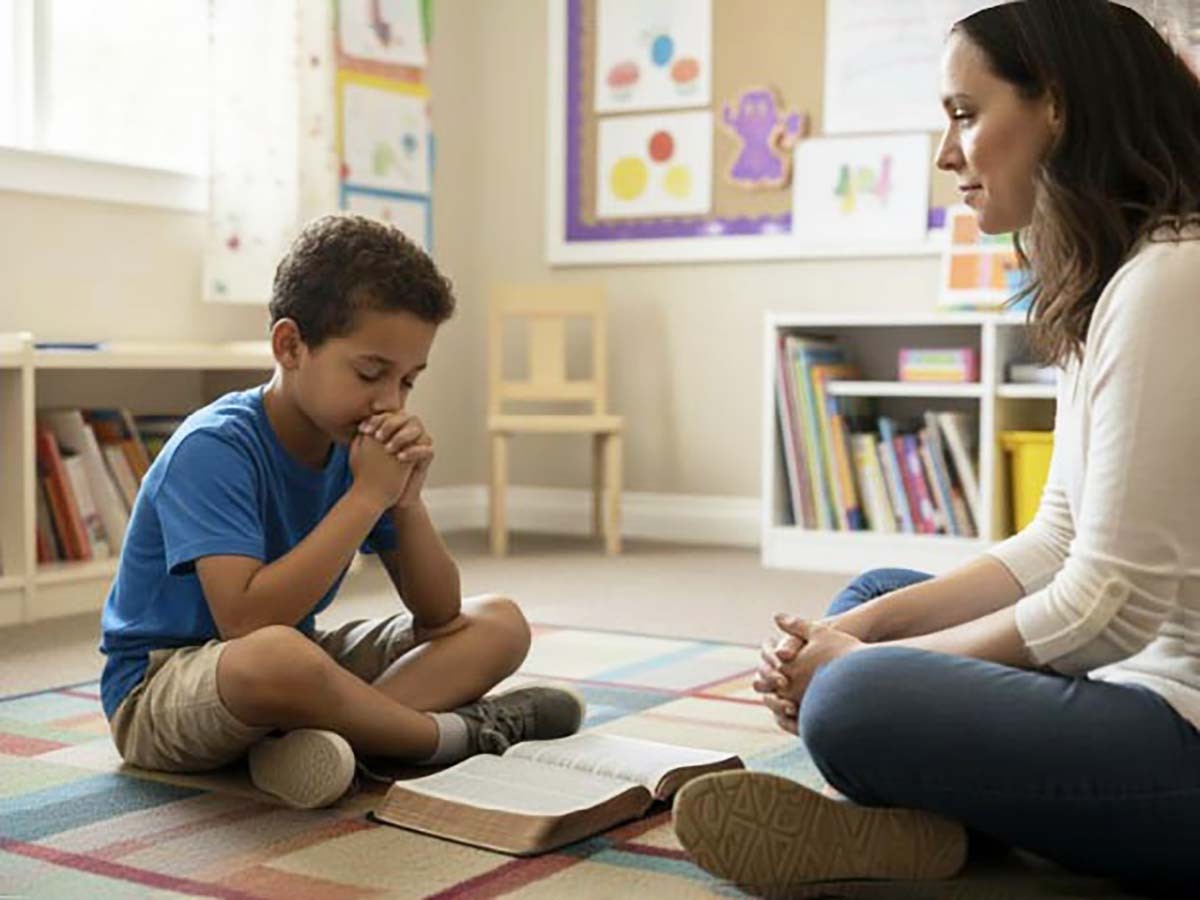
Think of salvation like walking up a set of steps together. You are not pushing a child forward. You are guiding them gently, one steady step at a time.
- Hear the Good News: We begin by sharing the simple truth. Salvation is a gift from God. It cannot be earned. Jesus has already done the work.
- Understand the Need: We help them see what sin is. Sin is choosing our own way instead of God’s truth. It separates us from Him.
- Believe in Jesus: We explain that Jesus is the only One who can forgive sin. Believing means trusting Him with our whole heart.
- Tell Him: We give them space to express their faith. Confessing is simply telling Jesus, “I believe in You. Please forgive me for my sins. I want You as my Savior and Lord.”
- Begin Following: Salvation is a beginning. We encourage them to get to know who God is by reading the Bible, listening to, and talking to God, and learning to follow His absolute truth every day.
Each step builds on the one before it.
As leaders, we walk beside them, steady and patient, helping them understand what they believe and why it matters. This keeps the message clear without oversimplifying it, and it protects the depth of the most important decision they will ever make.
Salvation Is More Than a Prayer
Romans 10:9–10 teaches belief and confession. But salvation is not about repeating words.
The prayer of salvation for kids is meaningful only when:
- The child understands who Jesus is.
- They understand why He died.
- They understand what it means for Him to be Lord
How teachers can impart "purity" over "performance"
We must guard our hearts against chasing numbers or getting caught up in the excitement of hands raised at an altar call. I remember feeling pressure to report how many children prayed for salvation each week. In my younger years, that pressure sometimes felt like accomplishment, especially around Easter and Christmas when higher numbers were often expected. But salvation is not a statistic. It is a sacred, personal decision.
We must also be careful with the way we extend an invitation. Asking, “Who wants to accept Jesus?” can prompt many hands, including children who have responded before. I began asking, “Who has accepted Jesus as Savior?” to bring clarity and reduce repeated responses. That simple shift changed the tone.
Today, I’m cautious about large group altar calls with children unless they are followed by one-on-one conversations with a trusted adult who can help confirm the child truly understands their decision. These moments deserve personal attention and thoughtful care. Above all, we never want a child to feel rushed or pressured. Instead, we want them to respond when they are ready, willing, and being led by the Holy Spirit.
Romans 10:9 and Galatians 2:20 remind us that salvation is not merely repeating words. It is surrender. It is covenant life with Christ.
We invite children into a relationship with Jesus Christ, not a religious ritual.
Salvation is not a magic phrase. It is trust in Jesus as Savior and faithfulness to Him as Lord. When we frame it this way, we protect clarity and depth.
How Sunday School Lessons Help Children Understand Surrender
For children, surrender must be relational. It is not about losing who we are. Instead, it is the beautiful invitation to find true life in Jesus as we surrender to Him.
"It is no longer I who live, but Christ lives in me." Galatians 2:20
Children can understand this when it is explained:
- Jesus loves you
- Jesus gave Himself for you
- Jesus wants a relationship with you
Here are several helpful salvation message teaching assets:
- Road to Jesus Match Up Game
- God So Loved the World Color Wheel
- God so Loved the World Wall Decals
- God so Love the World Banners
How to Recognize If a Child Is Ready for Salvation

Spiritual readiness is not determined by age but by understanding, sincerity, and the Holy Spirit’s work in the child’s heart.
| The Salvation Message | Key Factors and Indicators |
|---|---|
| Criteria for Readiness |
|
| Actionable Indicators |
|
Spiritual sensitivity matters more than memorized answers. I’ve found that true readiness shows up in a child’s quiet understanding and eager desire to receive Jesus, not in memorized answers. When their faith feels personal and heartfelt, that’s when the moment is real.
Tips for Sunday School teachers:
- To Build Understanding: Use visual wall art that defines terms like "Grace" and "Faith", so children see them every Sunday. See examples of inspiring kids church wall art.
- To Discern Sincerity: Use Bible activity engagement, one-on-one journaling prompts, or "prayer jars" to give children a private space to express their thoughts.
- To Account for Context: Ensure you provide a welcoming classroom environment for every "story" — from the child who knows every verse to the one who just walked in the door.
Awareness of "sincerity" vs "imitation"
Children often respond after:
- A sibling is baptized
- A friend responds
- Public altar call
We move carefully. Prepare how to minister when a child responds right after watching someone else step forward. Children often imitate what they admire, especially during emotional or celebratory moments.
An altar call can be powerful. A friend raises a hand. A sibling is baptized. The room celebrates. Attention follows. None of this is wrong. It simply means we pause.
We gently ask thoughtful questions. Why do you want to ask Jesus into your life? What does it mean for Jesus to be Lord? Is this your belief or shared excitement?
We are not interrogating a child. We are clarifying their understanding and heart motive with patience and care.
Our goal is not speed but depth. We help them think clearly and respond personally to the most important decision of their life.
When they receive Jesus as Savior and Lord, it becomes more than a moment. It becomes the beginning of a real relationship that can shape their whole life.
What children experience before hearing of salvation matters:
Some children grow up saturated in Scripture.
Others are hearing it clearly for the first time.
Personality also shapes response.
Context influences expression; it does not create salvation.
Salvation is not reserved for the easy child (or adult)
At one church where I served, children came from many different home environments. Some had parents nurturing their faith, while others were raised by grandparents, foster parents, or guardians with heavy responsibilities.
One boy came each week with a neighbor and quickly became one of my most challenging students. Almost every service he ended up in my office for attitude, disobedience, or impulsive behavior.
If I am honest, some weeks I hoped he might not come because I did not feel equipped to handle him.
Yet those difficult moments led to many one-on-one conversations, and one day he said he wanted to be saved. In that moment, I remembered that the Holy Spirit understands a child’s behavior, personality, or background. What I thought was discipline may have been discipleship.
Salvation is not reserved for the easy child. When God is at work in a child's heart, our calling is to meet them where they are and to share the gospel faithfully. And that is why understanding a child's spiritual readiness matters so much.
The Children’s Ministry Salvation Checklist
Children’s ministry leaders can use this quick guide when walking a child through the gospel:
- ✓ Explain the gospel in clear, simple language
- ✓ Ask questions that reveal the child’s understanding
- ✓ Watch for sincerity rather than memorized answers
- ✓ Slow down moments influenced by imitation or excitement
- ✓ Avoid pressure or emotional manipulation
- ✓ Encourage children to speak to Jesus in their own words
- ✓ Communicate with parents about the conversation
- ✓ Plan intentional discipleship after salvation
Salvation is not the finish line of Kids Church ministry
It is the beginning of a lifelong relationship with Christ.
Leading children to Jesus is one of the most precious moments a ministry leader will ever experience with the children entrusted to their care.
May we always allow God to guide these sacred moments, so they are never rushed. As we listen carefully, discern their hearts, and lead with clarity and compassion, we help point them to Jesus—the One who loves them, offers the gift of salvation, and invites them into a lifelong relationship with Him.
Continue: The Skills Of Teaching the Child Salvation Journey
Helping a child begin their relationship with Jesus is not the finish line. It is the beginning of a lifelong walk of faith!
New here? Start with Part 1 to better understand spiritual readiness and discerning a child's response to the gospel.
In Part 3, we’ll explore what comes next in a child’s faith journey, including baptism for children, and how to guide children into lifelong Christian discipleship. We help you make sure your team has the right tools to explain the gospel clearly and beautifully.