
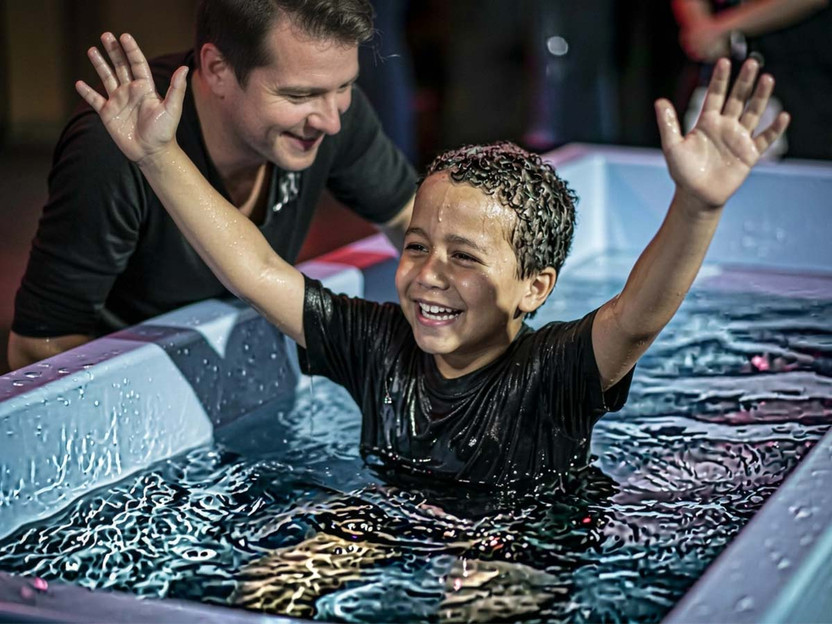
Guide to Baptism and Discipleship for Kids
Posted by Michele Triplett on 6th Aug 2026
If you are asking, "What do I do next now that this child has accepted Christ?" Randy and Michele Triplet have the answer.
When a child makes the decision to follow Jesus, guiding their next steps is a vital responsibility. To help you navigate this journey, Randy and Michele designed this guide around three main ideas: understanding personal faith in Jesus, explaining baptism as an outward symbol of that faith, and practicing daily discipleship to help them grow.
What Happens After a Child Accepts Jesus?
When a child trusts Jesus, something real and profound happens. Accepting His gift of salvation instantly changes their identity. But this journey doesn't happen in isolation; it unfolds through the active influence of parents, teachers, and ministry leaders.
What Changes When a Child Becomes a Christian?
The Bible says:
“This means that anyone who belongs to Christ has become a new person. The old life is gone; a new life has begun!” — 2 Corinthians 5:17
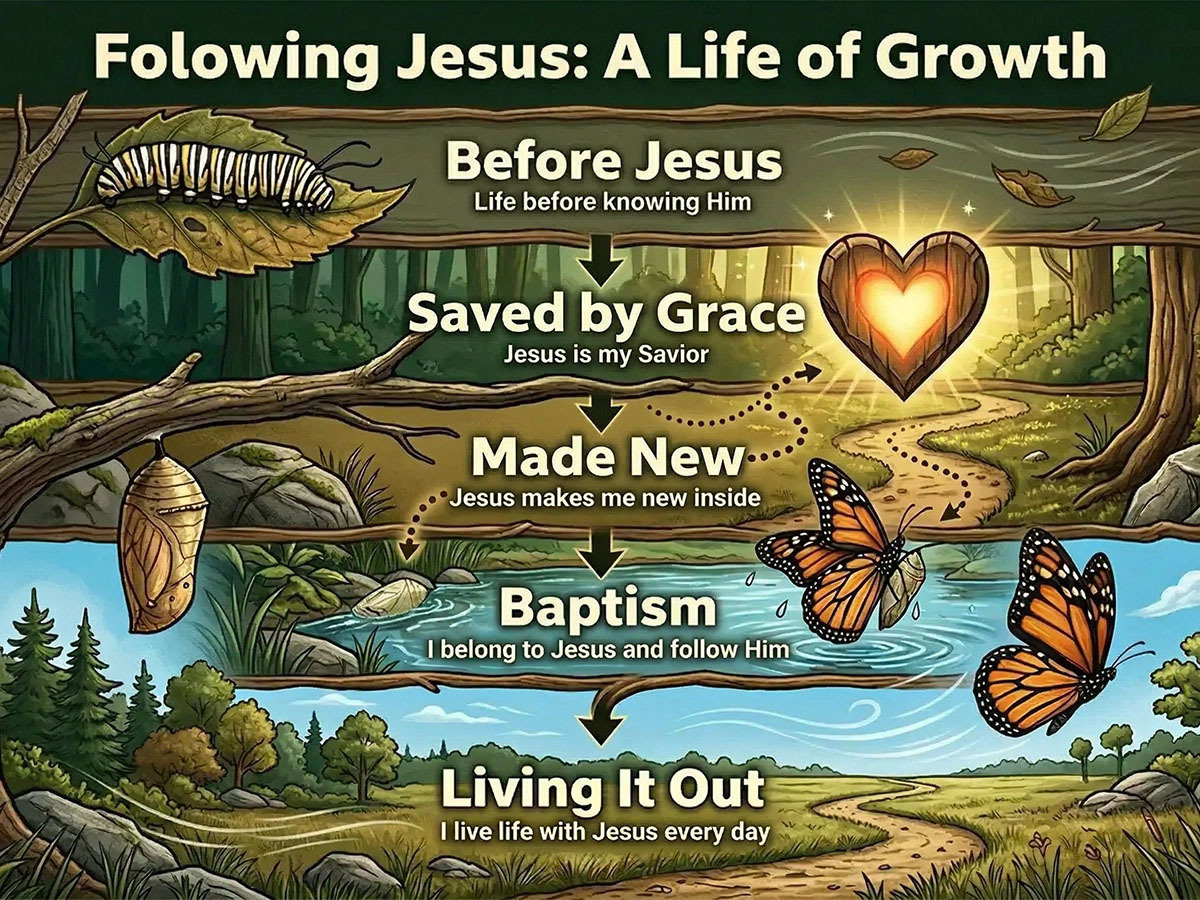
One of the most effective ways to help kids grasp this concept is through the visual example of a caterpillar becoming a butterfly.
From Caterpillar to Butterfly
Before: The Caterpillar
- A caterpillar doesn’t try to become a butterfly.
- It doesn’t earn wings or practice flying.
- It was created with everything it needs inside to become something new.
Salvation: When Everything Changes
When a child places their faith in Jesus, they are made new on the inside. Their identity changes immediately, and Jesus now lives in them. They are not trying to become new—they already are.
The Bible says:
“My old self has been crucified with Christ. It is no longer I who live, but Christ lives in me.” — Galatians 2:20
CreativeForKids offers a handy visual guide, the Follow Me Salvation Booklet.
The Cocoon: Transformation Begins
After this change begins, the caterpillar enters the cocoon. It doesn’t enter the cocoon to become a butterfly; it goes in because transformation has already begun. Inside the cocoon, the old form is broken down, and something completely new is formed.
What Changed the Moment They Believed
The Bible tells us:
“For you died, and your life is now hidden with Christ in God.” — Colossians 3:3
When a child trusts Jesus:
- Their old life is gone.
- Their identity is entirely new.
- Jesus lives inside them.
By following Jesus Christ in baptism, they are still themselves, but changed from the inside out.
Why Do Children Still Struggle After Salvation?
Even with a new identity, children will still feel tempted and face struggles. Old fears and habits do not define them anymore, but the enemy will still try to influence them. This doesn’t mean their salvation wasn't real; it means they now have to learn how to use the new power within them.
When we teach them about that power—and how to walk in it—it changes how they respond.
The Bible says:
“The one who is in you is greater than the one who is in the world.” — 1 John 4:4
When we teach kids how to walk in that power, it changes how they respond to doubt. They can confidently say, “That’s not true. Jesus made me new.”
Baptism: Showing the Change
Baptism does not make a child new; it declares that they already are. It is like the butterfly emerging from the cocoon.
“For we died and were buried with Christ by baptism. And just as Christ was raised from the dead by the glorious power of the Father, now we also may live new lives.” — Romans 6:4
Baptism represents:
- Dying with Christ.
- Being raised to new life.
- Belonging to Jesus.
It is a public way of saying, “My life belongs to You, Jesus. I want to follow You.”
Is Baptism Necessary After Salvation for Children?
Baptism is not the beginning of following Jesus. It is an important step along the journey.
“Anyone who believes and is baptized will be saved…” — Mark 16:16
“Therefore, go and make disciples…, baptizing them in the name of the Father and the Son and the Holy Spirit.” — Matthew 28:19
- Following Jesus begins at salvation.
- Baptism expresses that new life.
- Spiritual growth continues afterward.
How Do You Know If a Child Is Ready for Baptism?
A child is ready for baptism when they can:
- Explain their faith in their own words.
- Sincerely say, “My life belongs to You, Jesus. I want to follow You.”
- Show a growing desire to know and follow Jesus.
Baptism should follow understanding, not just emotion. God looks at the heart, and we should too.
After Baptism: Learning to Live the New Life

Becoming a butterfly is not the end; it is the beginning of learning to fly.
“Abide in Me, and I in you… Apart from Me you can do nothing.” — John 15:4-5
As leaders and mentors, our role is to help children understand, clearly and repeatedly:
- Jesus is with them.
- Jesus is in them.
- Jesus helps them live this new life.
This new life is not about trying harder or managing behavior. It is not sustained by human effort. It is lived through connection—remaining in Christ, depending on Him, and allowing Him to live through them.
When people ask, “That sounds good… but how?” we must remind them that this kind of life is learned over time. If you’re not sure how to help a child begin, we’ve put together a simple, practical guide you can walk through together.
Download the Parent Guide for Daily Discipleship (A simple resource you can share with families and reinforce in your ministry).
The Critical Gap Most Leaders Miss
Here’s where many discipleship models for kids break down: you can explain identity in Christ, but if it isn’t reinforced in a child’s daily environment, it will be overwritten.
Children are not shaped most by what they are told. They are shaped by what is modeled, reinforced, and repeated around them. This includes the physical environments they are in every day. What they see repeatedly begins to shape what feels true.
The spaces where children learn about Jesus are not neutral; they are actively part of their formation. Our Train Up A Child Preschool Wall Decal is great visual encourager. A room that reflects Scripture, truth, and joy reinforces what is being taught. A room that doesn’t still reinforces something.
This is one of the reasons Creative For Kids exists — to help churches create environments that visually reinforce biblical truth and support the discipleship happening in their classrooms and hallways. You can learn more about our kids ministry resources and consultation services.
When children consistently see biblical truth, it moves from something they hear to something that feels real and present. This places a significant responsibility on the leaders and adults shaping their world.
The good news is that we are not doing this alone. Jesus is with us, in us, and He is the one who strengthens us to disciple well.
Our Role: Pray, Pay Attention, Participate
Discipleship after baptism is not passive. It requires intentional spiritual leadership from those guiding children—parents, teachers, volunteers, and ministry leaders.
1. Pray — Speak Identity Over Them
Do not default to vague prayers. Paul was highly intentional. He understood the power of speaking God’s Word over people and situations. This applies just as much in the classroom or ministry setting as it does at home.
Pray scripture-based identity and spiritual strength over children, just as Paul did over the early church. This is active formation, not sentiment.
Models from Paul’s Prayers:
- Ephesians 1:17–19
- Ephesians 3:16–19
- Philippians 1:9–11
- Colossians 1:9–12
- 1 Thessalonians 3:12–13
If you are not praying, you are leaving formation to chance. Let’s not leave anything to chance. We have included a simple guide at the end of this blog to help you pray with confidence. Our The Spirit Of God Lives In Me Scripture Crisp Design Wall Decal reminds kids of their new strength in Christ.
2. Pay Attention — Monitor What Is Shaping Them
Children are constantly being discipled—by friends, media, culture, and their environment. If we are not paying attention, something else will shape them.
Be deliberate:
- Watch their relationships.
- Observe their behavior patterns.
- Ask meaningful questions.
- Evaluate external influences.
When you look to Jesus for guidance, this does not become controlling—it becomes caring. Pay attention to the moments you choose and the atmosphere you create; they matter just as much as the questions themselves. Stay curious, not critical, asking in a way that opens conversation instead of shutting it down.
3. Participate — Walk With Them
Most adults stay at the level of instruction, which is insufficient. Children need engaged teaching guides, not distant authority figures.
Walk with them through:
- Their questions.
- Their struggles.
- Their spiritual growth.
Teach them to depend on Jesus in real life—not just through what you say, but through how you live. Let them see your questions, your struggles, and your growth. Your authenticity will teach them more than any lecture ever could. Ask God to guide you in when and how to be open with them as you walk side by side.
For a great reminder, download our Parent Guide for Daily Discipleship.
The Outcome of Intentional Discipleship
Children don’t just learn facts about Jesus; they learn how to be in a genuine relationship with Him. They learn to:
- Hear Him.
- Trust Him.
- Depend on Him.
- Live from the truth of who they are in Him.
Discipleship for children is the process of helping them understand their identity in Christ, learn to depend on Him, and grow in a daily relationship with Jesus.
This Is What Matters Most
This is not about producing well-behaved kids. It is about forming children who know that Christ lives in them, and who know how to live that out because someone at home and in their church walked through life with them and showed them the way.
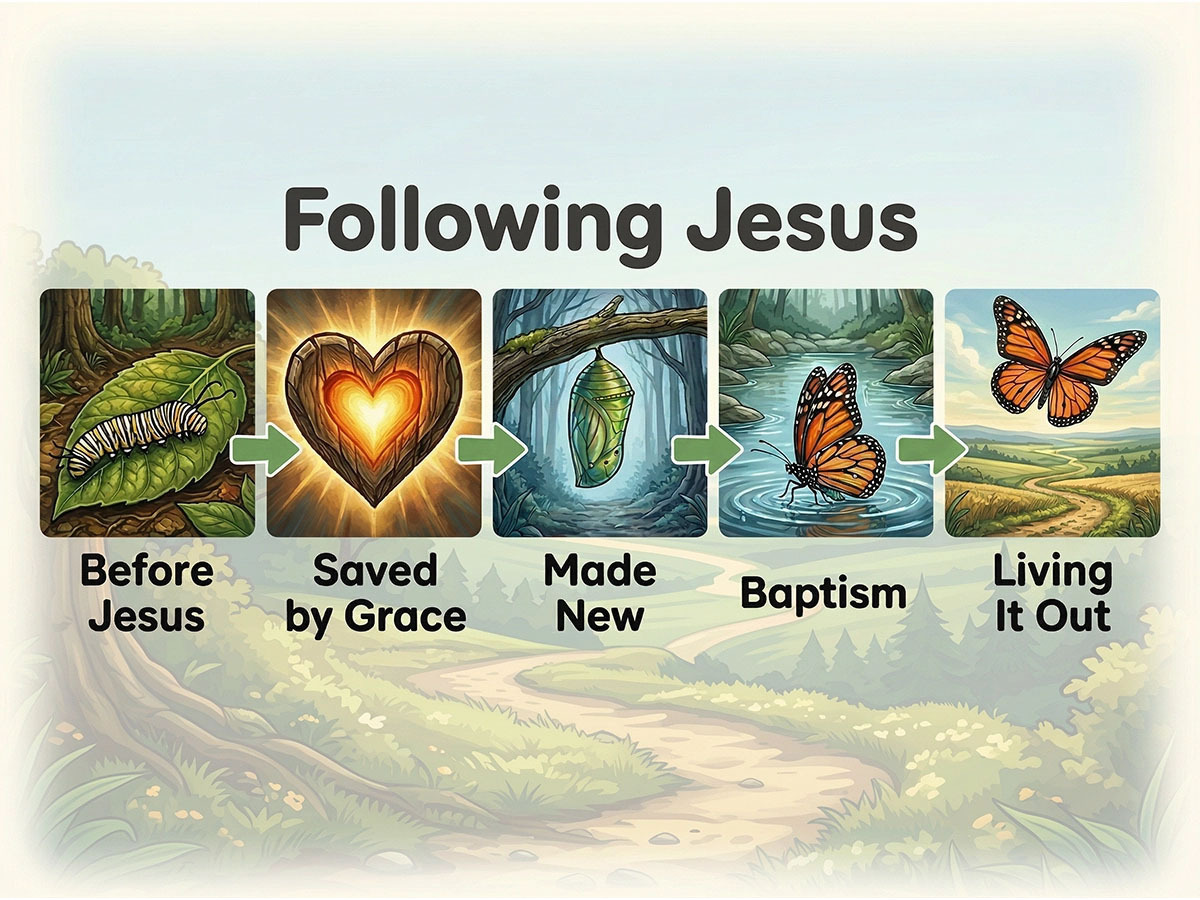
The Journey in One View
The Truth That Changes Everything
We don’t work to become new; we grow because Jesus has already made us new.
What We’re Really After
We are not creating short-term moments to count. We are guiding children into a lifelong relationship with Jesus.
The Journey Continues
Baptism is a meaningful milestone, but it is not the finish line. When a child says, “My life belongs to Jesus,” the real work of discipleship is just beginning.
They will still have questions, face temptation, and need guidance, encouragement, correction, and truth. That is why discipleship cannot be reduced to a single conversation, a prayer, or even a moment as significant as baptism.
Children need adults who will continue showing up—adults who will pray for them, teach them, listen to them, encourage them, and consistently point them back to Jesus.
The good news is that their growth does not ultimately depend on us. We have a responsibility to participate, but Jesus is the One who transforms hearts. He is the One who continues the work He began when a child first trusted Him.
Our role is to be faithful:
- To keep teaching.
- To keep praying.
- To keep walking alongside them.
- And to trust that God is at work, even when growth is slow or difficult to see.
Because the goal is not simply that children make a decision for Christ. The goal is that they learn to walk with Him for a lifetime.
They are not trying to become new; they already are. (Note: If you need a handy visual guide to explain this to children, our Follow Me Salvation Booklet is a perfect ministry tool).
Equip Your Ministry for the Journey Ahead
Baptism is a beautiful milestone, but the real work of discipleship is just beginning. Children need adults who will continue to show up, pray, and point them back to Jesus. Your goal is not simply to help a child make a one-time decision for Christ, but to equip them to walk with Him for a lifetime.
If you are ready to build a children's ministry that visually and spiritually supports this lifelong journey, we are here to help.
Explore our full 3-part series on Salvation and Baptism to equip your team today:
Our interactive discipleship resources are specifically designed for children's pastors, Sunday school teachers, and ministry volunteers to guide children through their early steps of faith.
- Part 1: How to Talk About Salvation With Kids
- Part 2: Child Salvation: Nurturing and Recognizing Readiness
- Part 3: A Clear Guide to Baptism and Discipleship for Kids (You are here!)